Musings from a Late-Diagnosed Spelman Alumna
Written by Tanisha E. Jarvis, M.A.
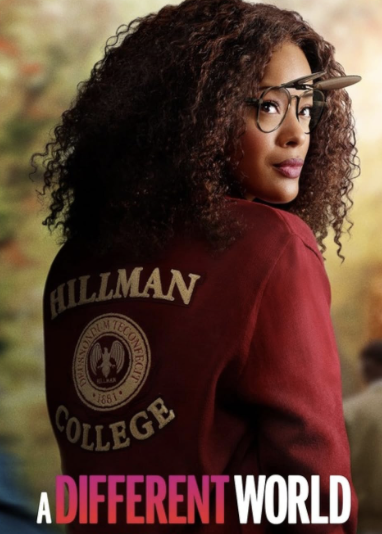
Figure 1. [Image of Deborah Wayne], from [A Different World] by [Netflix], [2026] [https://www.imdb.com/title/tt33081352/]
A Different World is back, baby! With a new main cast and a different era, but the heart of the show stays the same. What has drawn a generation of viewers from the 80’s to a Different World (especially when Debbie Allen took over as show runner), was how raw and real the show was. It was a real reflection and representation of what African-American college students were experiencing in 1987-1993: racism, colorism, dating, sex, and trying to earn a degree that set them up for generational success. At the time, there was nothing similar on tv to A Different World. When Hollywood was ignoring the realities of Black youth (especially HBCU’s) A Different World was on a whole nother level.
The show ended the year I was born; 1993. Yet, I became acquainted with the shows when re-runs would play on the tv. It was a staple in my house, with The Cosby Show and Living Single. The Afro-centric intellectualism, Black sorority & fraternity life, and “fly” fashion made me dream about attending an HBCU. As a Black teen growing up in the predominantly white suburbs of D.C., I envisioned myself at Howard University.
A Different World is filmed in the Atlanta University Center Consortium (AUC); a consortium of HBCUs consisting of Clark Atlanta University, Morehouse College, and Spelman College. As I watched the show, seeing my old dorm, classrooms, and library I was transported back to my freshman year at Spelman College in 2011. However, what truly catches my attention and released an influx of complex memories is our MC Deborah Wayne and her storyline of late-diagnosis ADHD. I am a late-diagnosed AuDHD woman who was undiagnosed during my Spelman years. Deborah’s storyline was as if someone placed a mirror to my face—highlighting my own insecurities, fears, confusion, and experiences as a college student. In this article we will dissect the importance of Deborah’s storyline, share key moments in my own journey, and explore the importance this storyline has on late-diagnosed women; especially Black women.
“I Feel Broken”
When we are first introduced to Deborah Wayne, We learn two things about her:
She’s in a situationship with her childhood friend Shaquille Johnson.
She’s a know-it-all who puts herself in the center of solving EVERYONE’s problems (whether they want the help or not).
For many of us late-diagnosed women, we mask our neurodivergence and feeling of “I’m broken” behind a hyperfocused perfection of external worth and connection. If we seem competent, always put together, and wanted on the outside, then people won’t see how different we are. How we are secretly drowning in executive dysfunction.
“I haven’t taken a single note in my class. It’s not that I don’t care. I take my laptop out to take notes and my mind wanders…The truth is I’ve been like this since high school.”
-Deborah Wayne
As I watched the show I was transported back to my undergrad years. Living in those same dorms. Attending those same classrooms during the day, and that same library at night. I remember how I felt–so alone and broken. Here I was at this prestigious institution, where I was expected to produce my best work, advocate for my community following the footsteps of organizations like SNCC, and graduate with perfect grades. However, I was no longer special. I was a Black girl in a sea of other highly intelligent and motivated Black girls. Some of them who could attend parties, date, and still get a 4.0 gpa. While I spent all my time in the library, re-reading my textbook for the hundredth time because my mind would wander. Here I was the girl who loved social sciences and biology, who could give a wonderful presentation, but who ended the year with a 3.0 gpa. In middle school and high school, I could bury my math grades, behind my As. I was the sole Black girl who would finish a year worth of school work during the first week. My teachers did not know what to do with me, so they let me be. I would go off to the library or plan events for one of my many organizations I formed. Because I was not externally destructive and because they did not know what to do with a Black child like me, I was ignored and neurodivergence fell through the cracks because it was concealed by my 3.8 gpa. At Spelman, my good grades could no longer save me. My professors and classmates noticed me constantly, and they were not impressed. I was not living up to my potential.
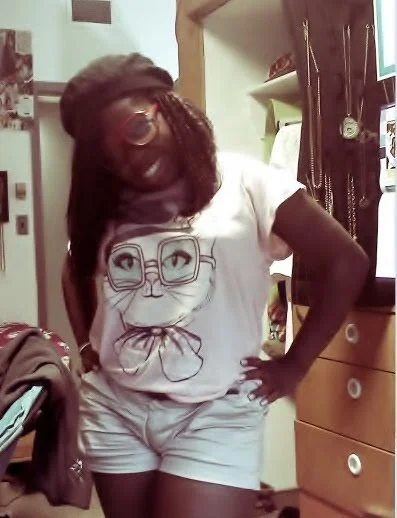
Freshman year (undiagnosed) Nisha in my dorm at Spelman
My story is not unique. It’s what many late-diagnosed neurodivergent Black girls experience. There’s always signs, but sometimes we are ignored. By our community, society, and even ourselves.
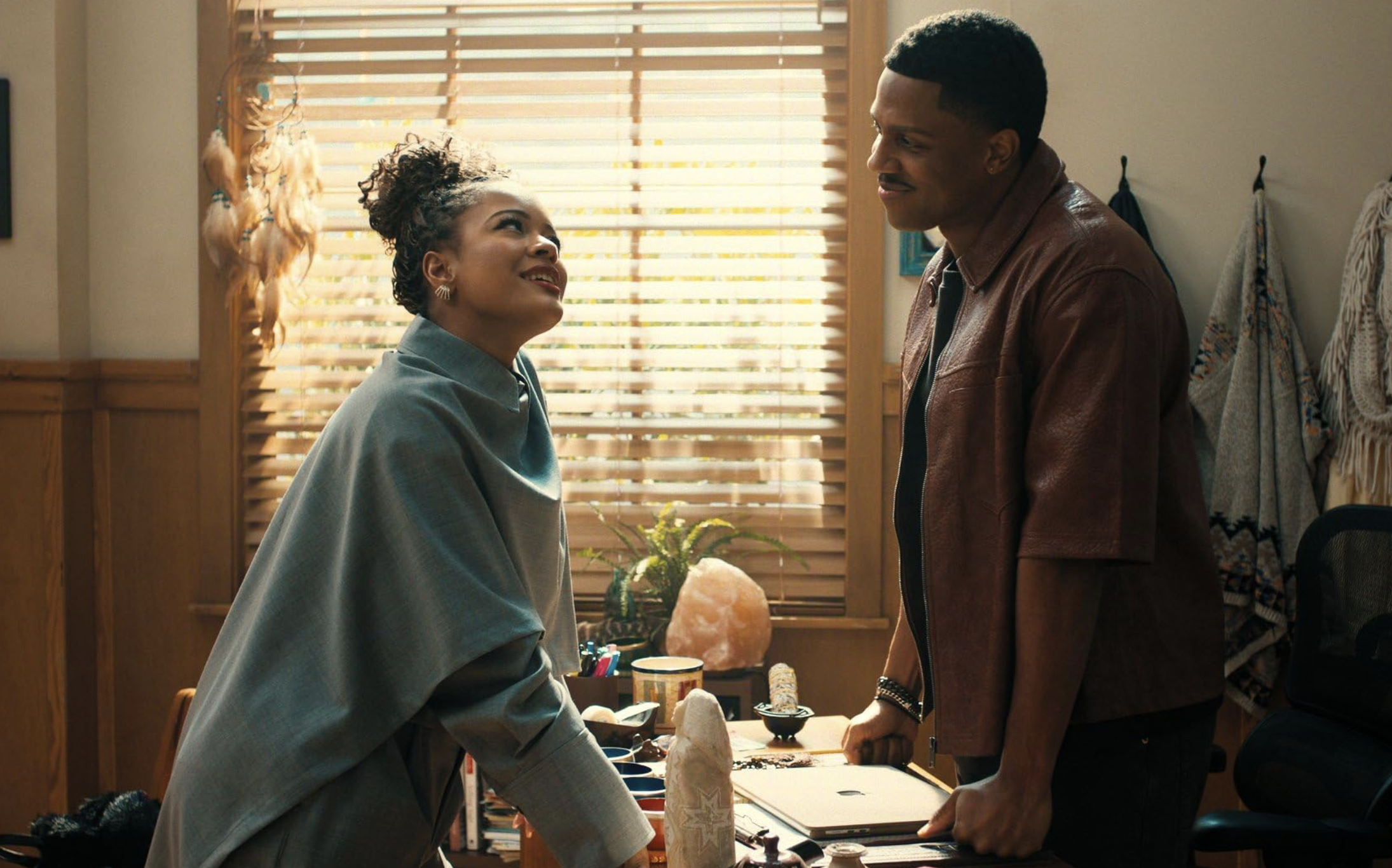
Figure 2. [Image of Deborah Wayne and Ellington], from [A Different World] by [Netflix], [2026] [https://www.imdb.com/title/tt33081352/mediaviewer/rm944567810/]
“Damn.”
There’s immense denial and internalized ableism for many late-diagnosed neurodivergents. For those of us, who did not get tested for ADHD as children, we think our challenges are quirks we need to overcome. Executive dysfunction becomes laziness. Decision paralysis becomes procrastination. When we can’t overcome these challenges with “working harder” or “just stop being that way”, we learn to perceive ourselves as innately flawed.
We see this in real-time with Deborah’s initial conversation with Ellignton, her tutor. As she is describing her challenges with attention and concentration he shares,
“When I was in high school my grades were trash. It was like my brain did not work how it was supposed to. Everybody was ready to give up on me, but my uncle he recognized what was really going on, and long story short, I got diagnosed with dyslexia.”
-Ellington
This is a call-back to Theo (Ellington’s uncle) who shared his own experience with dyslexia in the 80’s The Cosby Show.
And what is Deborah’s response to all of this?
“Damn!”
-Deborah Wayne
Because while Deborah is finding relief and support in Ellington’s tutoring, implementing the parking lot method, the pomodoro method, and color coding techniques, she’s not disabled. She’s not like Ellington and those neurodivergent kids.
“I went to school with kids who were neurodivergent and they were all over the place”
-Deborah Wayne
Not Deborah, though. She’s built different. I was also built different. My struggle with math was not because I was disabled, come on! Sometimes the number just teleport your brain into a maze of gray fog, but that’s normal! My inability to sit still more than 5 minutes without humming, tapping, or moving my body, ALL NORMAL!
And when Ellington has the AUDACITY to suggest,
“I saw you were struggling to focus during our first session, you might consider getting tested for learning disabilities.”
-Ellington
Well, he just went and lost his damn mind! Deborah was so offended that now she had to double-down. She was going to show him (and anyone who taught she was “disabled”) that she could overcome her challenges. She would work harder than she ever worked before. Be even more into solving everyone else’s problems business because the reality: inside she knew the truth. That she couldn’t positive think herself out of a disability. That she was disabled and struggling, but she was taught (unconsciously by her family, society, and herself) that to be disabled is to be othered. To be less than. Her worth was tied to her productivity, and without productivity and success, who would Deborah Wayne be?
“Unfortunately, despite all your gains you still have a 2.8 GPA.”
The average age for a woman with ADHD to be diagnosed is around 30 years old. Especially for Black women who are often misdiagnosed or symptoms are ignored. I became aware of my autism at age 28. It wasn’t later, until my therapist suggested I matched the symptoms of ADHD, that I became aware of my AuDHD (autism + ADHD; 70% of autistic adults are also diagnosed with autism). I was flabbergasted. ADHD?! Couldn’t be me. The girl who graduated from Spelman? Got her M.A. in psychology and had a 4.0 GPA her final semester? The one who is always early [“To be early is to be on time, to be on time is to be late”; if you know you know.]? Couldn’t be me! But I was also the one who was STRUGGLING with taking exams and statistics. And even though I am early, I do that so I can scope out the room—knowing all the exits to leave early or pick a seat away from the crowds. I didn’t know at the time, that many of my quirkswere my AuDHD behavior. And that for many of us Black women were are high masking, meaning we’ve adapted to our environment by exhibiting behaviors that are socially acceptable, while denying our own authenticity.
“I’m a Neurodivergent Baddie!”
Some of us have been struggling for YEARS. Even DECADES. So to see this following scene on a popular, Netflix show healed my heart.
After Deborah abruptly ended her conversation with Ellington, she was on her bullshit era. Doubling down and getting nowhere. So she meets with her advisor, played by Debbie Allen, and inquires about getting assessed. Off screen she is assessed through the student disability office and receives her diagnosis.
One of the last scenes of this storyline, and the most heartwarming, is Deborah’s conversation with her parents. Dwayne and Whitley are being your typical nosy parents, trying to put a stop to her messy situationship and also support their daughter through her academic journey. Come on we, love a multifaceted duo!
“With your new [she whispers] diagnosis you have to learn how to adapt to your new normal. Your father and I, mainly your father, might have missed the early signs”
-Whitley Gilbert Wayne
For many of us late-diagnosed ADHD girlies, our parents’ acceptance and understanding of our neurodivergence can be a nightmare. There’s the complexity of, “how did you miss this for so many years?” “Why did you not get me assessed?” It can be a hard reality to accept, however for many of our parents our neurodivergent challenges and symptoms were normalized. My child might be struggling with math, but she gets A’s in every other subject, so it can’t be that serious. Or, yes my child is parkour all hours of the day, but she’s just a quirky child! Or, I also have a full-blown breakdown after I can’t find my car keys, this is normal behavior. That last sentence is super important because sometimes it’s not that our parents ignore the signs, sometimes [and science show us often] your parent, and their parents, and generations before them were STRUGGLING with untreated, undiagnosed neurodivergence and it’s been the family secret for generations. Women like Deborah and I, get to break that cycle (just smash it with a hammer, a chainsaw, everything because the cycle ends with us!).
“First of all, we don’t have to refer to it as my diagnosis. I have ADHD. And yes, it was difficult to grow up undiagnosed carrying the burden of some mysterious condition, but I’m glad to have an explanation of why my brain ticks the way it does.”
-Deborah Wayne
Yes, girl! There comes a moment. After the grief of being late-diagnosed. The “if I was diagnosed earlier, I could have done that differently” or “all these years wasted, for what?”. The moment where you learn that your brain is not broken. That you are not broken. You’re just built differently. You have a different neurotype. So instead of trying to push yourself into a relationship, thought process, action, whatever that does not work for your brain—you can create your own systems that make your life easier. Boom! That was the answer the whole time?!
“I’m not the screw up that you always thought I was. I’m a neurodivergent baddie! I’m an attention deficit diva”
-Deborah Wayne
And change the way our lives how we have been operating in our lives. We don't have to suffer in silence anymore. There's help. Their support. And a different world captures that reality so beautifully.
CONCLUSION
When A Different World premiered in the late 80’s it was ground-breaking TV. It storylines centered Black college students as they navigated the real experiences of their generation; racism, dating, identity, etc… With the direction of Debbie Allen, it tackled storylines from domestic violence to police brutality. Its relatability is what saved the show from cancellation and made it a household name.
The reboot holds the same soul as the original show, but has modernized its message to meet us Zillenials and Gen Z. For many of us Black women with ADHD, there is no representation of us in the media. To finally see our collected story through this medium is amazing! I watched this show with my family and when this storyline came on I felt so much pride and joy. Because the 18 year-old who stepped on Spelman’s campus was an insecure, know-it-all, who was masking desperately so my professors/classmates would not see how much I was struggling. This 33 year old woman who is learning how to unmask, take up space, and be my authentic self saw an alternative reflection of myself in Deborah Wayne’s character. A “what if I had been diagnosed earlier?”. “What if I had the academic and parent support that Deborah got?”
It is what it is. But for a young lady sitting in her first ADW class at Spelman College this semester. A young girl who has the fire and passion to excel in school and make her people proud. A sister who is trying to discover herself in her relationships, new identity, and future self. Watching Deborah Wayne’s storyline is going to be that A-ha moment for her. This is the difference between consuming media and a media platform that intentionally integrates inclusivity and diversity into its storyline.
About the NeuroDiverse Experience Lab
The NeuroDiverse Experience Lab LLC is an organization that supports high-masking neurodivergent professionals through educational awareness, and community-power building. Our founder Tanisha E. Jarvis, M.A. (Nisha J.) is a neurodivergent and suicide prevention educator, consultant, and community advocate. She is a Black/Afro-Latinx, Queer, neurodivergent, and chronically-disabled woman who uses this platform to reclaim power for marginalized voices. We create the NeuroDiversity Liberation Framework™ which is the foundation of our 1:1 program My AuDHD Burnout Recovery Roadmap. A program to support high-masking neurodivergent professionals through burnout.
If you are a high-masking neurodivergent professional and want to begin the journey to overcome burnout, apply today.